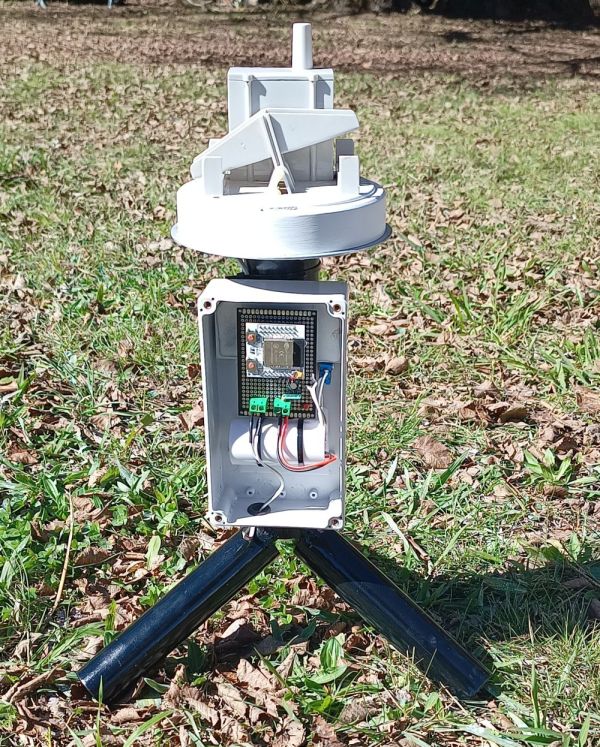
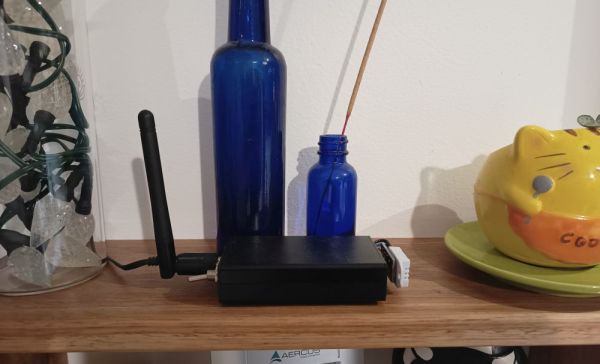
I've been working on building a weather station over the last few months and while I haven't completed all the sensors, I have a few done including recently a rain gauge. The receiver is based around the "Random Nerd Tutorials ESP-NOW Web Server Sensor Dashboard" in which the data is displayed on a web page.... Continue Reading →
Customizing the Random Nerd Tutorials ESP-NOW Web Server Sensor Dashboard
I've wanted to build a weather station for a long time, probably for at least 30 years. Droughts are common here, and we rely on rain for all our household water. Our house is also quite exposed to strong winds. At one point a neighbour a couple of kilometers away had their roof blown off... Continue Reading →
Me and ChatGPT build a Simple Si5351 VFO for the 40MHz Direct Conversion receiver
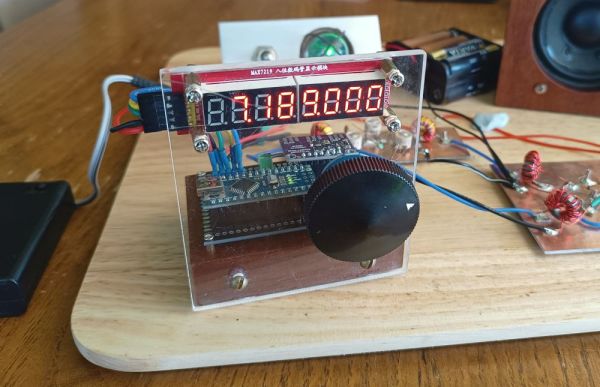
Ever since I started tinkering with Arduinos I’ve wanted to build a shortwave receiver using a Si5351 oscillator to tune the frequency. When I saw and built the Soldersmoke Direct Conversion receiver I immediately saw a chance to give it a try. While I've dabbled a lot with Arduinos, I have never used the Si5351.... Continue Reading →
ESP32: Wakeup from multiple GPIO sources and using predefined pin definitions instead of bitmask
The ESP32 can be set to wake up from sleep due to one of several pins going high. Which pin caused it to wake up? This has been causing me a few headaches with my combined mailbox and driveway monitor because sometimes multiple pins can be high at once. While researching this I also discovered... Continue Reading →
Attempting to change the backlight of a 16X2 LCD from green to red
The mailbox and driveway monitor that I built has a 12X2 LCD screen. I know these are not as fancy as many newer displays, but I like their simplicity. The screen in this project runs all the time, usually displaying the time. When mail is delivered, I wanted a coloured visual alert as well as... Continue Reading →
Building a smart mailbox: Challenges and unsolved issues
My main Arduino project for the last few months is trying to design and build a monitor that wirelessly sends an alert to the house when mail has been delivered in the mailbox or a vehicle goes through the front gate. I wanted the sender unit to be solar powered and use an ESP32. Reed... Continue Reading →
Calculating bitmask value for ESP32 external wake up: Google is your friend
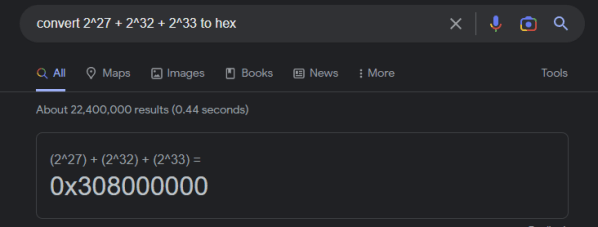
Update 14 April 2024: I've discovered that it is not necessary to calculate bitmask values for the ext1 external wakeup with the ESP32. There are predefined definitions that you can use. If you are interested check out my post ESP32: Wakeup from multiple GPIO sources and using predefined pin definitions instead of bitmask I'm currently... Continue Reading →
Converting raw data samples into meaningful results: Calibration and formula generation
So you have a sensor connected to your microcontroller. How do you calibrate it, particularly if the values from the sensor are not linear? That's a problem I have thought about before and it came up again yesterday when I wanted a project to monitor a battery voltage level. The current project that I am... Continue Reading →
Experimenting with audio tones using the ESP32 for use in projects
Update 3rd December 2024: I've discovered that the code I had listed here no longer worked with the Espressif ESP32 V3 core that was released a while back. I've updated the post so that the example sketch works with v3. A reader alerted me to the Tone function for Arduino. When I was making my... Continue Reading →
Mini voltmeters with breadboard projects
When working with a project on a breadboard I've been caught with the supply voltage on the breadboard not being what I expected which resulted in the project not working as expected. To help prevent this I've bought some cheap mini 2 and 3 wire voltmeters. These sell for a couple of (AU) dollars. The... Continue Reading →