I've been thinking if there is an easy way to make a simple and cheap control knob to replace those cheap quadrature rotary encoders in Arduino projects without the need to change the Arduino code or at least very minimal changes. This would only work if the angle sensor could produce a quadrature output like... Continue Reading →
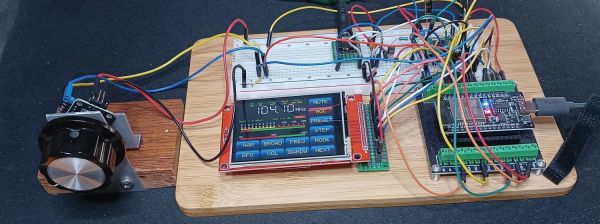
Converting a Potentiometer For Use With a Magnetic Rotary Encoder
I've been experimenting with angle sensor modules to use them as a replacement for those cheap rotary encoders. I like those cheap rotary encoders, but I'm looking for something better where the knob turns smoothly and it doesn't wear out. The cheap encoders wear fairly quickly and then contact bounce can become a problem. Also,... Continue Reading →
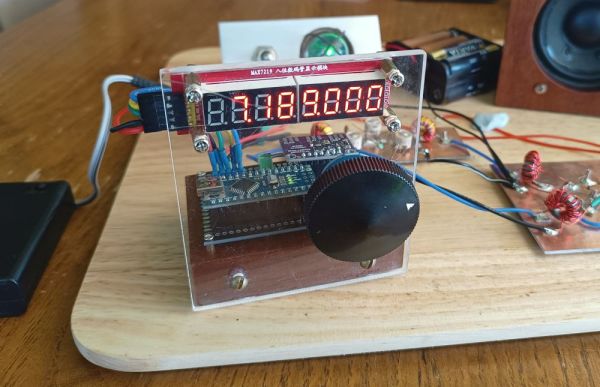
Building a Tuning Wheel For PC SDR Radio Using an Angle Sensor
I have a soft spot for rotary encoders. They are so simple, yet work so well as an interface. I have mostly used the cheap mechanical quadrature rotary encoders that are sold on modules. However, there are a couple of projects that I'm interested in where these are not ideal. The first is the tuning... Continue Reading →
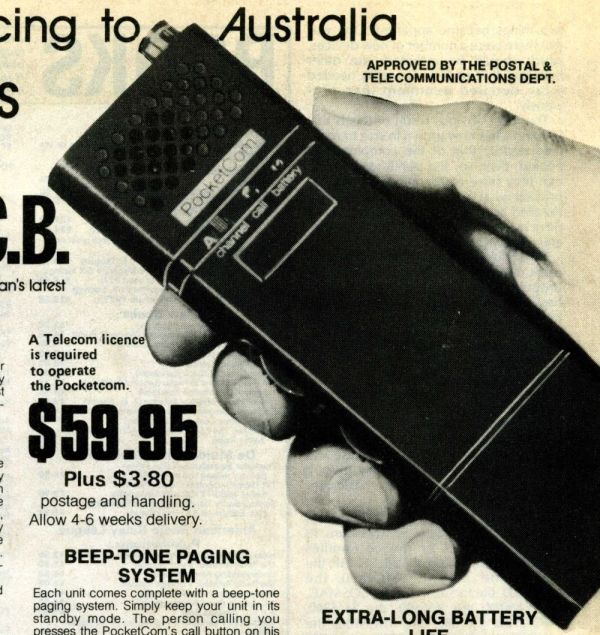
CBs and and the PocketCom Walkie Talkies in the 70’s: My start in electronics
Around 1976 a friend and I became very interested in CB radio. The craze had not long taken off in Australia and it was still illegal to use them at that time. Dick Smith Electronics and later Tandy’s sold CB radios, antennas and accessories. Despite being illegal to use them, that didn’t stop a lot... Continue Reading →
Me and ChatGPT build a Simple Si5351 VFO for the 40MHz Direct Conversion receiver
Ever since I started tinkering with Arduinos I’ve wanted to build a shortwave receiver using a Si5351 oscillator to tune the frequency. When I saw and built the Soldersmoke Direct Conversion receiver I immediately saw a chance to give it a try. While I've dabbled a lot with Arduinos, I have never used the Si5351.... Continue Reading →
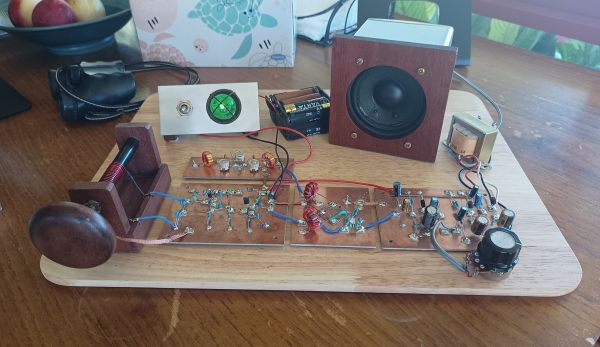
My Build of the Soldersmoke 40M Direct Conversion Receiver
While I don't have an Amateur Radio license, I do find radio interesting. I often listen to the Soldersmoke podcast and look at their blog. I became interested in the Direct Conversion Radio they had designed. The radio covers the 40-meter or 7-MHz amateur radio frequency band. It is fairly simple and deliberately uses discrete... Continue Reading →