
I’ve never owned a proper set of helping hands for soldering, so I can’t tell you how good they are. I’ve tried using metal spring clams, but that didn’t work well. For the last few years I’ve been using blu tack the Julien Illet way.
It works well, but sometimes I just need to tin a wire or hold a component steady, so I decided to try and cobble together my own helping hands using whatever odds and ends I had lying around. Here’s what I experimented with:
- Ball bearings: I have one large and lots of medium sized ones. I tried holding these in place with magnets
- Roller bearings, large washers and nuts: to sit the ball bearings for adjustment
- Magnets: Salvaged from an old shake torch and some hard drives
- A small ball mount for a camera: This had potential but didn’t quite work out
- Spring tweezers: Squeeze-to-open ones. I had two old pairs and bought this new one from AliExpress
- A piece of old Australian hardwood
- Silicon tubing: Recovered from an old model aircraft engine
Here are some of the items I started with

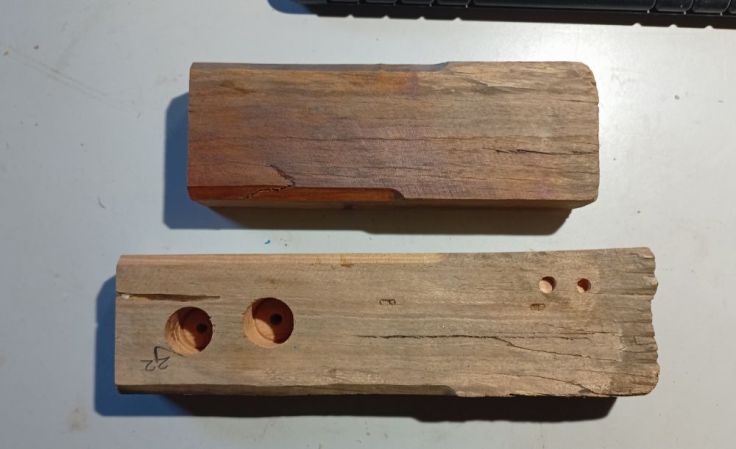
This is the timber I started with. It didn’t look much to start with but I’m happy with how it finished.
What didn’t work
I didn’t have any success with the camera ball mount. A better quality one may have worked, but the adjustment mechanism on the one I have is not very good. I also couldn’t get the nuts and smaller ball bearings working together with the magnets I had. They just didn’t hold together firmly enough.
What did work
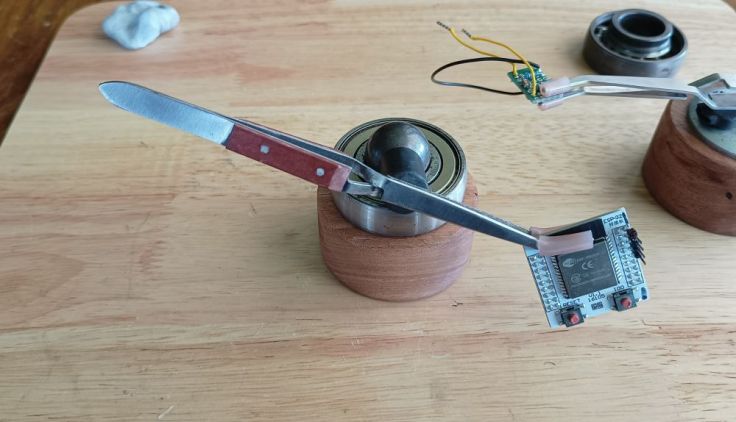
The large ball bearing combined with the roller bearings, magnet from the shaky torch and tweezers turned out to be a good combination. The magnet is strong enough to hold everything together, even including the ball bearing in the roller bearing, and it’s smooth to adjust. It just holds components and small modules in place, but not larger circuit boards. One downside and that is components and tools are attracted to the roller bearing because of the magnet. I ended up fastening one of the bearings on to the top of a piece of hardwood to prevent that.
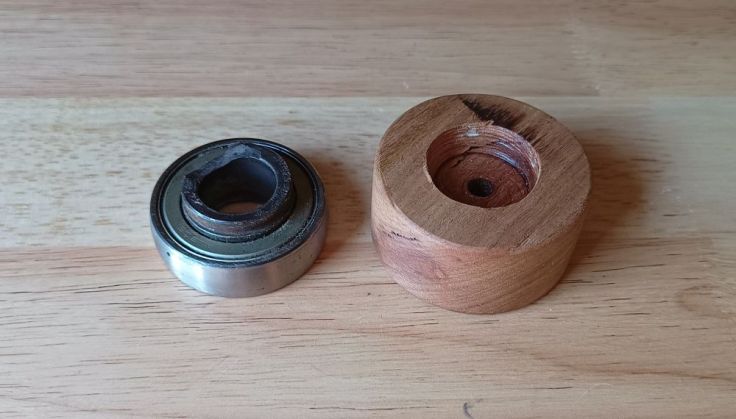
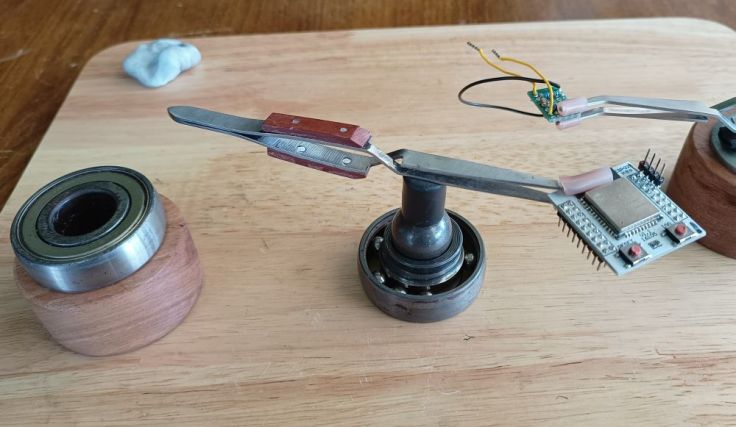
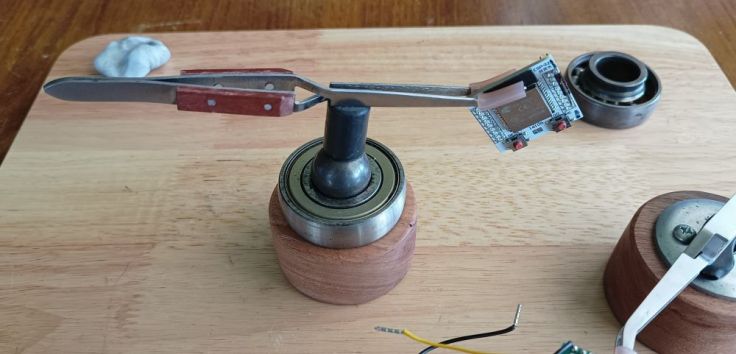
I also made a simpler version without the ball-bearing pivot. I drilled holes through an old washer (from a long-hoarded car shock absorber I had been holding on to for 40 years) and screwed it onto a piece of timber. The magnet for this one came from an old hard drive.
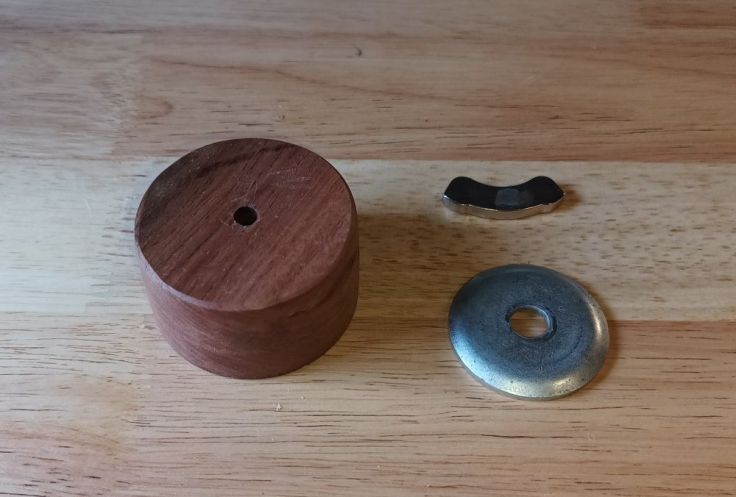

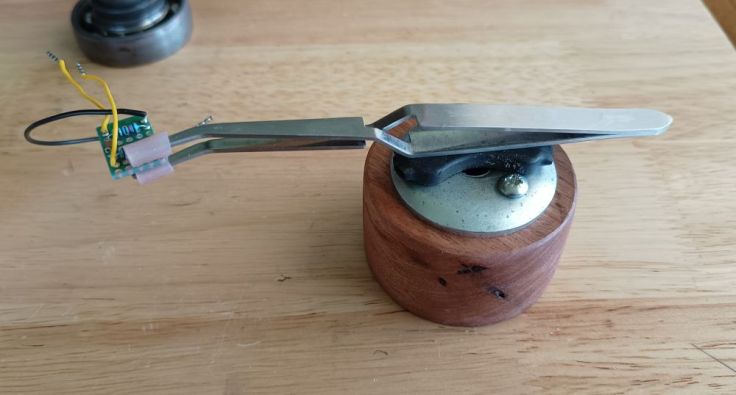

I sleeved both magnets with heat-shrink tubing. I placed short lengths of silicon tubing on the tweezers. If I hadn’t had the silicon tubing, I would have used some from the spares that came with a solder sucker I recently bought on AliExpress.
Result
They are not going to completely replace the blu tack. For some things, particularly soldering circuit boards, blu tack just works better. I like that blu tack holds things close to the bench allowing me to rest my wrist while soldering to help control shaking.
I’m happy with both setups; they’ve proven quite handy. That said, I’m cautious about using strong magnets near certain components. If you think of any potential issues, let me know.
 Garry's blog
Leave a comment