
If I said I lived in a small city you would probably have a misconception about the size of the place. While it is called a city it only has a population of around 20 000. In most places of this size it would be considered a rural town. There are some advantages and disadvantages to living in a rural place with a small population.
I’ve read of people talking about going into big city electronics stores when they were young. I didn’t get to go into one until I was in my 20’s. For a time we did have a Tandy and later another small electronics shop, but these were small and didn’t stock much, certainly not more expensive items like oscilloscopes and amateur radio gear. For me information about electronics came from magazines. Most purchases were few and far between and came by mail order from Dick Smith electronics. My memories of mail order were that I often had to order some extra things to get the order up to a minimum amount and when it was received some critical part I needed for a project was on backorder but those extra things I didn’t really need always came.
Some people remember the 70’s and 80’s electronics hobby scene as something extra special, but their experience must have been different from mine. I find the ability to get information, to obtain reasonably priced parts and share with other people so much easier now. I still had a lot of fun, but from a perspective of getting info and parts I found it harder.
Other than big electronics shops in our major cities another advantage in many Australian cities is that many have scheduled kerbside collection of large items and these can include all sorts of things including electronics items, furniture, bicycles and sporting equipment. Also, people in cities often just place things on the kerb for anyone to take. Other than a occasional cases where someone leaves something on the kerb, those don’t happen here.
Australia’s big cities also have lots of thrift stores, but I hear these are starting to charge more for items. I’ve heard that lots of the higher value items that are donated in regional areas go to the city shops where they can get a better price. I don’t know if that is true, but I can understand why that may happen.
The tip shop
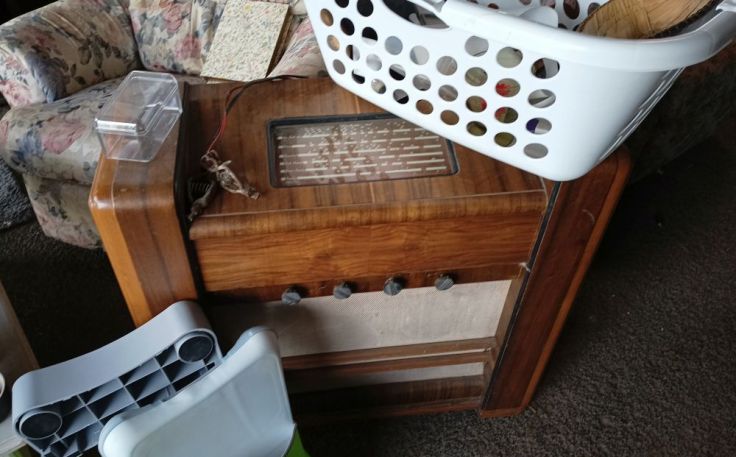
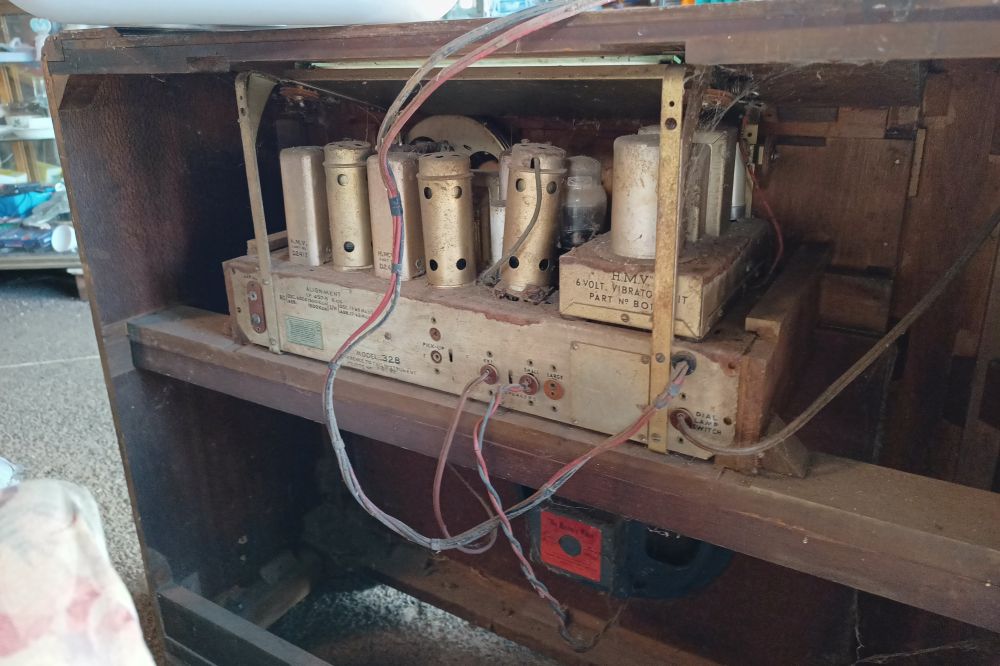
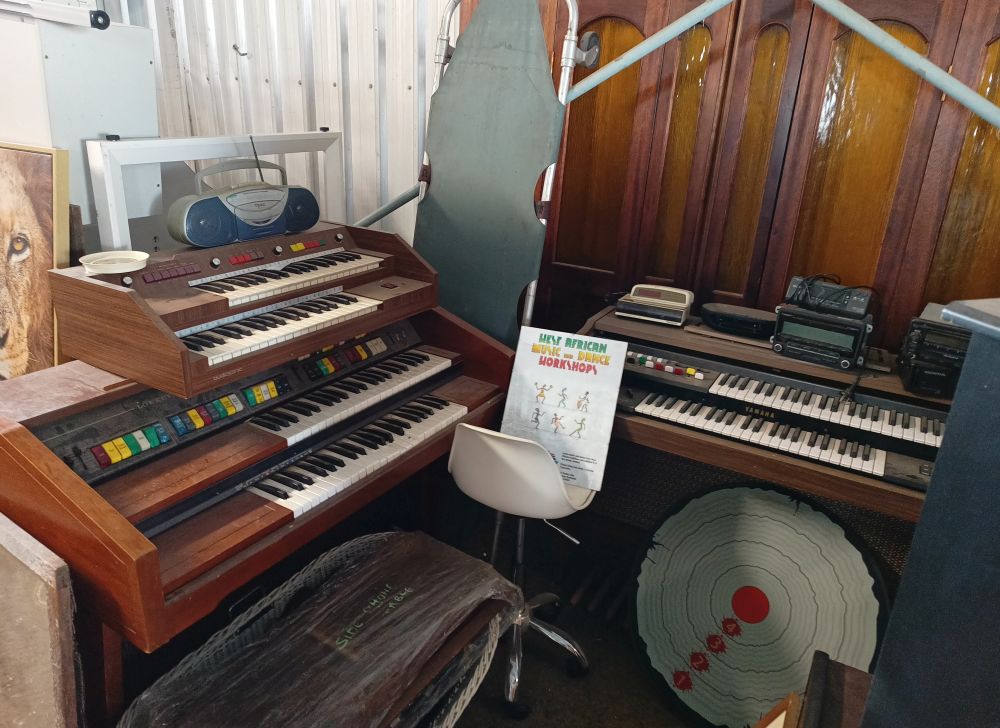
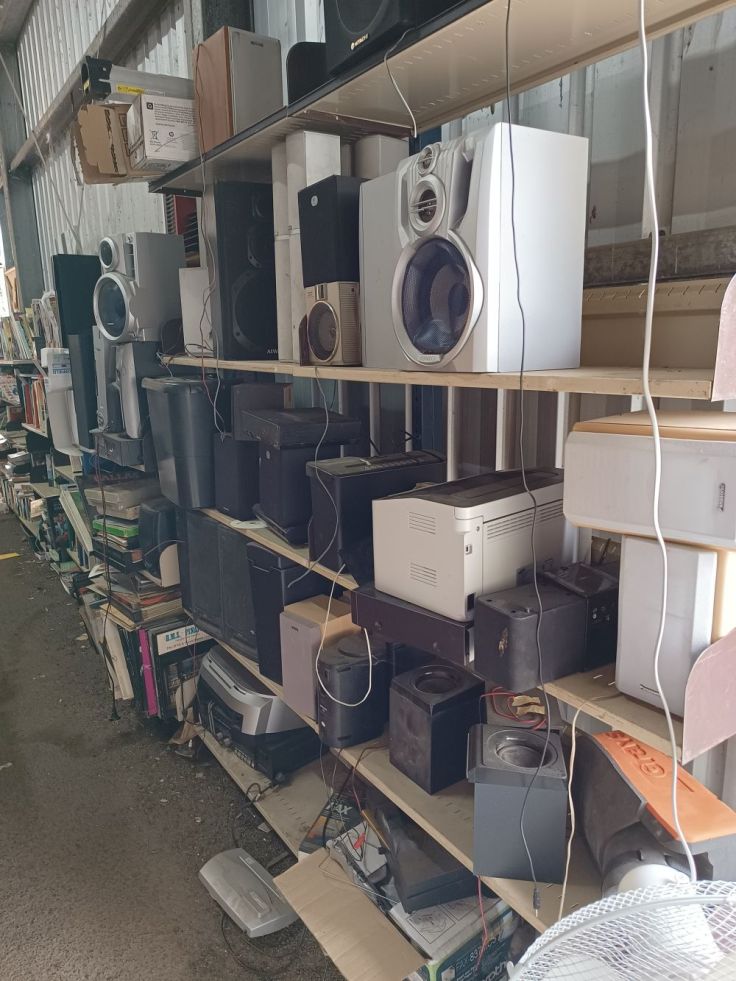
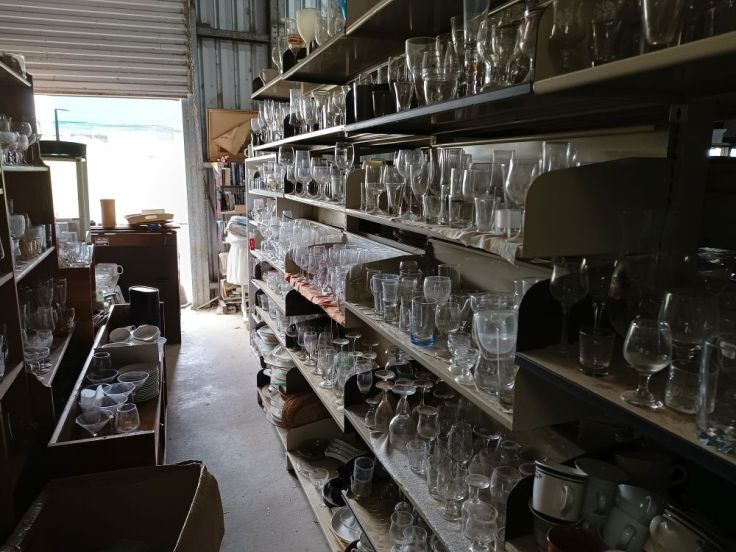
Where we may have an advantage is that the waste collection facility here is only 10 – 15 minutes driving distance from anywhere in town and has a small shop. The shop known by the locals as ‘the tip show’ or ‘the dump shop’, collects items directly or are retrieved by the staff at the waste collection facility. The shop is not particularly big and it can get a bit cluttered. The staff are friendly, and the prices are excellent. They are inundated with stuff so it is priced for a fast turnaround. For me the small cost far outweighs the convenience and knowing that some locals are getting jobs. And, it’s supporting a system that is addressing the waste problem.

Going to the shop to look for something you specifically want may lead to failure, unless you are looking for plates and cups, but we still rarely leave empty handed. I’m trying to reduce the amount of stuff we have so I leave lots of things that I find tempting, but I still often buy some things. There are sometimes bits for projects.
It’s surprising just how much useful stuff would have ended up in landfill.
Things for sale
Here are a few pictures that I’ve taken. These are not all from the one visit and last time I went they were doing a massive cleanup so some of these will probably be gone now.





My purchases
To give you an idea of price, we have bought a few office chairs that have been high quality and in good condition. They have ranged from AU$5 – AU$10 (about US$3 – US$6). We also bought a 2 seater lounge in good condition for AU$40 (US$25).
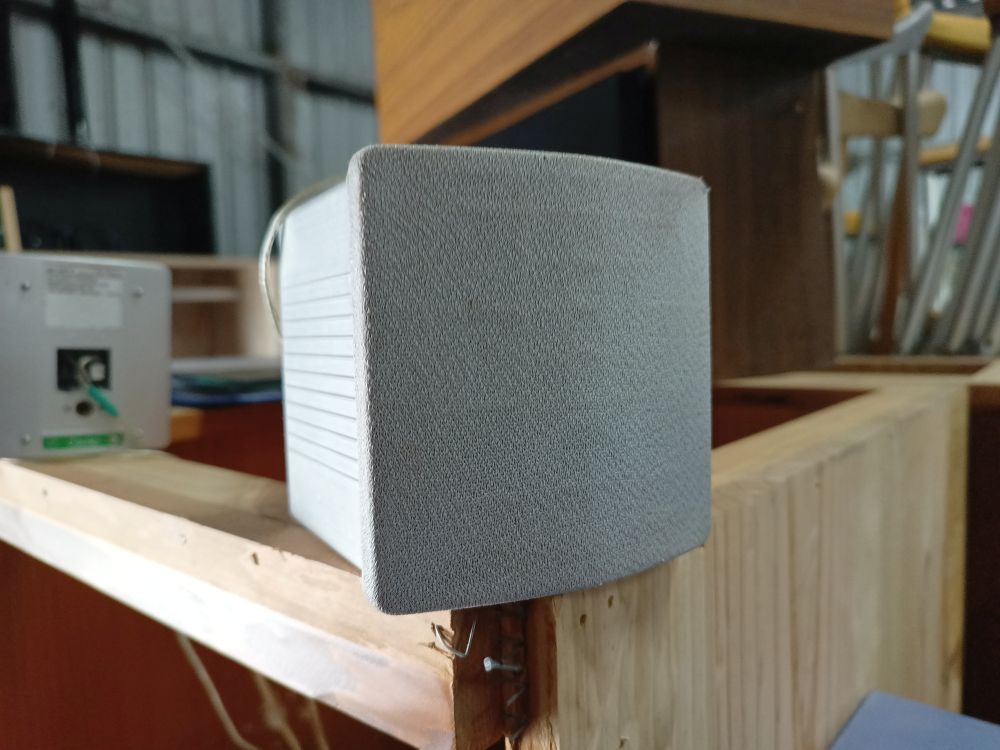
I haven’t bought too many things for electronics projects but I have bought speakers. I think these ones were both about AU$10 (US$6) for the set of 5. These are great when breadboarding and also for finished projects. I particularly like the black Yamaha set. Both sets below are from surround sound systems.
These are the Yamaha speakers. I really like the look of these. With the last couple of clocks I’ve made I’ve placed an external speaker socket on the clock and plugged on of these in.

The Sony ones below have a different look and are fairly good too.
I’ve also bought a few USB cables, mostly to use as a power cable for projects. I’ve bought a bunch of other things at the same time so I don’t have a price, but it would have been almost nothing.
Do you have anything like this in your area? What places do you find you get useful used things?
 Garry's blog
I grew up in the 1970’s, in a small village in England, which was much smaller than your town. There are no official figures for population, but it was probably around 500. However, the landscape was dotted with other nearby small villages and bigger towns and cities, so perhaps not quite the same experience as you. There were a few electronics stores in the nearby cities. For parts to build things, I relied on a combination of mail order from electronics magazines, the local electronics shops (more expensive than mail order), and parts pulled out from old equipment.
For the last 35 years or so, I have lived in large cities on the West Coast of the US. We did have some electronics stores in these cities in the past, which are now gone. Like you, I find parts these days much easier to find. Parts online are plentiful, and the computer interface makes sourcing parts much easier than thumbing through catalogs and magazines. For folk who like to design their own PCB’s, there are PCB fabrication services. Then there are 3D printers for enclosures and other parts. We are living in a golden age of homebrew electronics!
For a while, it seemed as if there was a lull in homebuilding of electronics gear, somewhere in the 90’s. I think that was the time I began waxing lyrically about homebuilding in the 70’s and 80’s, with it’s magazines for the homebuilder, and mail order services. Then along came the internet and the Maker movement and suddenly, it was even more fun than it had been before!
Your small town seems really cool. I’m quite envious! Resident of the San Francisco East Bay here. I like it, but would love to have the space to put up a large antenna…………..
LikeLike
Thanks for taking the time to comment. Now that you remind me, I also remember when it was thought the hobby was dying and it did seem that way. I particularly remember when surface mount components began to become popular it was expected that through hole ones would no longer be available and that would end it for even those still interested. And yet many through hole components still around using SMC components is possible for hobbyists.
I do have enough space for a fairly large antenna. I used to do a fair bit of experimenting with crystal radios and had an antenna for that but never got into amateur radio. I do find it fascinating, particularly what is being done with some digital modes. I find high altitude pico ballooning really interesting, but that seems to come with the risk of the balloon being shot down by a missile.
There are some good things about our small town, but the climate is fairly cool in winter. The days are usually ok but we get a lot of frosts which are harsh on the garden. Apparently 83 per cent of Australian’s live within 50 kms of the coastline. I can understand why that is. The climate there is not so harsh and more reliable rainfall.
LikeLike